



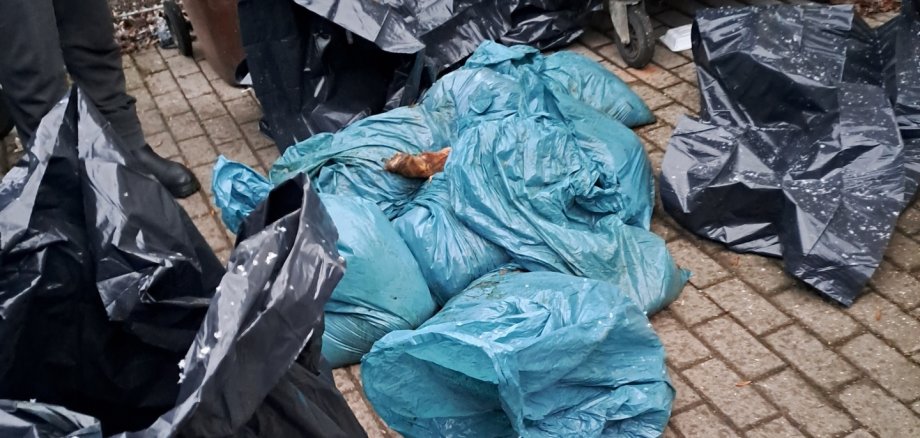
Bernburg/Aschersleben. Once again, large quantities of discarded slaughterhouse waste have caused a stir in Aschersleben. Alert residents of the northern outskirts of the town had informed the relevant veterinary authority about rubbish bags full of unprocessed animal remains, apparently from sheep, which had been found in bins at a collection point.
Unfortunately, it was not the first discovery of this kind and the Salzland district regularly has to deal with illegally disposed waste, the search for the perpetrators and the necessary consequences. After all, slaughtering, even in the private sector, and the processing and disposal of animal by-products, especially slaughterhouse waste, which is more than just "normal household waste", are subject to strict regulations in Germany. There is a good reason for this. Because improper disposal can contribute to the spread of animal diseases, the veterinary office would like to explain.
Dr Christian Lutter, official veterinarian and head of the specialist service, says of the latest incident: "This is waste of animal origin, which - in this quantity, even in the case of domestic slaughtering - may only be disposed of via authorised channels for reasons of animal disease and health protection. In any case, illegal dumping significantly impairs public order." The official veterinarian adds: "In Saxony-Anhalt, slaughterhouse waste must be reported to SecAnim GmbH for collection and made available. Moderate fees are charged for this. Other methods such as burying or using rubbish bins are only permitted up to the size of individual poultry or rabbit carcass remains."
In the Aschersleben residential area in question, however, the all-clear and relief should prevail for the time being. "Thanks to attentive residents and good observation, and thanks to the immediate, careful work of my official staff, we have now been able to track down the culprit," says Dr Lutter. He expressly thanks the local population for all the useful information, which is often needed in such cases. "Admittedly, a bit of serendipity also helped. Sometimes that's part of it. Further investigations will follow. Hopefully, with the help of the public order office, we can now consider the repeated findings of slaughterhouse waste with the corresponding risk potential for animals, livestock and public health to be a thing of the past."