
Two people sitting opposite each other in conversation. The woman explains and the man makes notes on a clipboard.
This page has been automatically translated. There may therefore be discrepancies and inaccuracies in the text. Only the original version is binding. Legal claims arising from the content of the translated version are excluded.

Debt counselling

Debt counselling

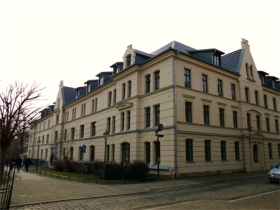
Job Centre building at the Aschersleben site

Location Aschersleben

Dr.-Wilhelm-Külz-Platz 3

06449 Aschersleben


Mrs Hocke

+49 3471 684-3223

Office hours:
Monday, Tuesday, Thursday, and Friday by appointment
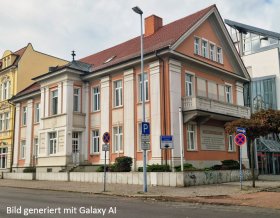
Job centre building at the Bernburg site, AI-generated image

LocationBernburg

Friedensallee 13

06406 Bernburg (Saale)


Mr Jerxsen

+49 3471 684-3227

Office hours:
Monday, Tuesday, Thursday, and Friday by appointment
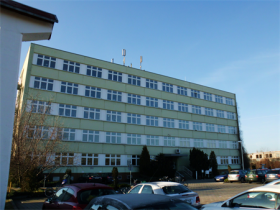
Job Centre building at the Schönebeck site

Schönebeck location

Grundweg 31

39218 Schönebeck (Elbe)


Ms Joneck

+49 3471 684-3307

Office hours:
Monday, Tuesday, Thursday, and Friday by appointment
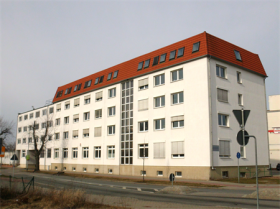
Job Centre building at the Staßfurt site

LocationStaßfurt

Bernburger Street 26

39418 Staßfurt


Mrs Hocke

+49 3471 684-3223

Office hours:
Monday, Tuesday, Thursday, and Friday by appointment

General information

In 2022, there were 5.88 million over-indebted citizens in Germany, which is around 8.48% of the country's total population. Changes in the consumer and credit market, high unemployment rates, the closure and rationalisation of companies and increasing poverty as well as changes in attitudes to life are often identified as causes of over-indebtedness. However, individual factors can also lead to a critical income and life situation or to a permanent inability to pay. A lack of experience and competence in dealing with everyday situations, in consumer and credit behaviour as well as in certain social and psychological constellations, such as after a divorce/separation or as a result of unemployment, poverty, illness, pregnancy or addiction. In most cases, it is an entanglement of several factors, individual problems and critical life events that leads to indebtedness and over-indebtedness.

The living conditions of over-indebted people are often difficult. Indebtedness and over-indebtedness have a significant impact on the participation of those affected in economic and social life. Over-indebtedness means poverty and social exclusion for those affected as well as a burden on the economy and public budgets. Debt counselling is a help and advice service aimed at people in or over-indebted and their relatives with the aim of regulating debt appropriately.

Main tasks

  • Recording the debt situation and the history of indebtedness or over-indebtedness
  • Development and elaboration of a debt relief strategy together with the debtors
  • Counselling debtors with regard to measures to secure their livelihood (e.g. housing benefit, citizen's allowance, care allowance, social assistance, etc.) and planned budget management
  • Development of debt settlement plans together with the debtors
  • Correspondence and negotiations with creditors
  • Development of repayment concepts with the creditors
  • Counselling and motivation to comply with the debt reduction strategy and the debt plan
  • Carrying out home visits
  • Issue of the P-account certificate
A woman holds money in her left hand and operates a calculator with her right hand. In front of her is an open organiser and a pen. There are several banknotes on the table. On the right is a piggy bank.

What should I bring with me to the initial debt counselling session?

Current proof of income such as:

  • Wage or salary statement
  • Notice of unemployment benefit or citizen's allowance
  • Social welfare or basic security certificate
  • Pension certificate
  • Notification of maintenance payments
  • Notice of housing benefit
  • Care allowance notice

Creditor documents such as:

  • Reminder letter
  • Dunning notice
  • Enforcement order


Make an appointment


Please make an appointment for an initial consultation.


Head of department

Mr Boennen

Dr.-Wilhelm-Külz-Platz 3

06449 Aschersleben

+49 3471 684-3230

Help with accessibility

  • General

    We strive to make our websites accessible to all users. Details can be found in our accessibility statement. Please send any suggestions for improvement to jc-redaktion@jc.kreis-slk.de.

  • Font size

    To adjust the font size, please use the following key combinations:

    Larger

    command
    +

    Smaller

    command

    Larger

    Ctrl
    +

    Smaller

    Ctrl
  • Keyboard navigation

    Use TAB and SHIFT + TAB to navigate through next/previous links, form elements, and buttons.

    Use ENTER to open links and interact with elements.

  • Contrast mode

    Press the following key combination to reduce or increase the contrast:

    Enlarge

    control
    option
    command
    .

    Decrease

    control
    option
    command
    ,
    Note: The shortcuts must be activated in the system settings of the operating system.

    Press the left ALT key + left SHIFT key + PRINT to quickly turn high contrast mode on or off.

  • Invert colours

    Press the following key combination to switch the colour inversion on and off:

    control
    option
    command
    8
    Note: The shortcuts must be activated in the system settings of the operating system.

    First activate the screen magnifier and then switch the colour inversion on and off with the following key combinations:

    1. screen magnifier

    +

    2. invert colours

    Ctrl
    Old
    I
  • Screen magnifier

    Press the following key combinations to use the screen magnifier:

    Switch on/off

    option
    command
    8

    Enlarge view

    option
    command
    =

    Zoom out view

    option
    command
    Note: The shortcuts must be activated in the system settings of the operating system.

    Switch on / Enlarge view

    +

    Zoom out view